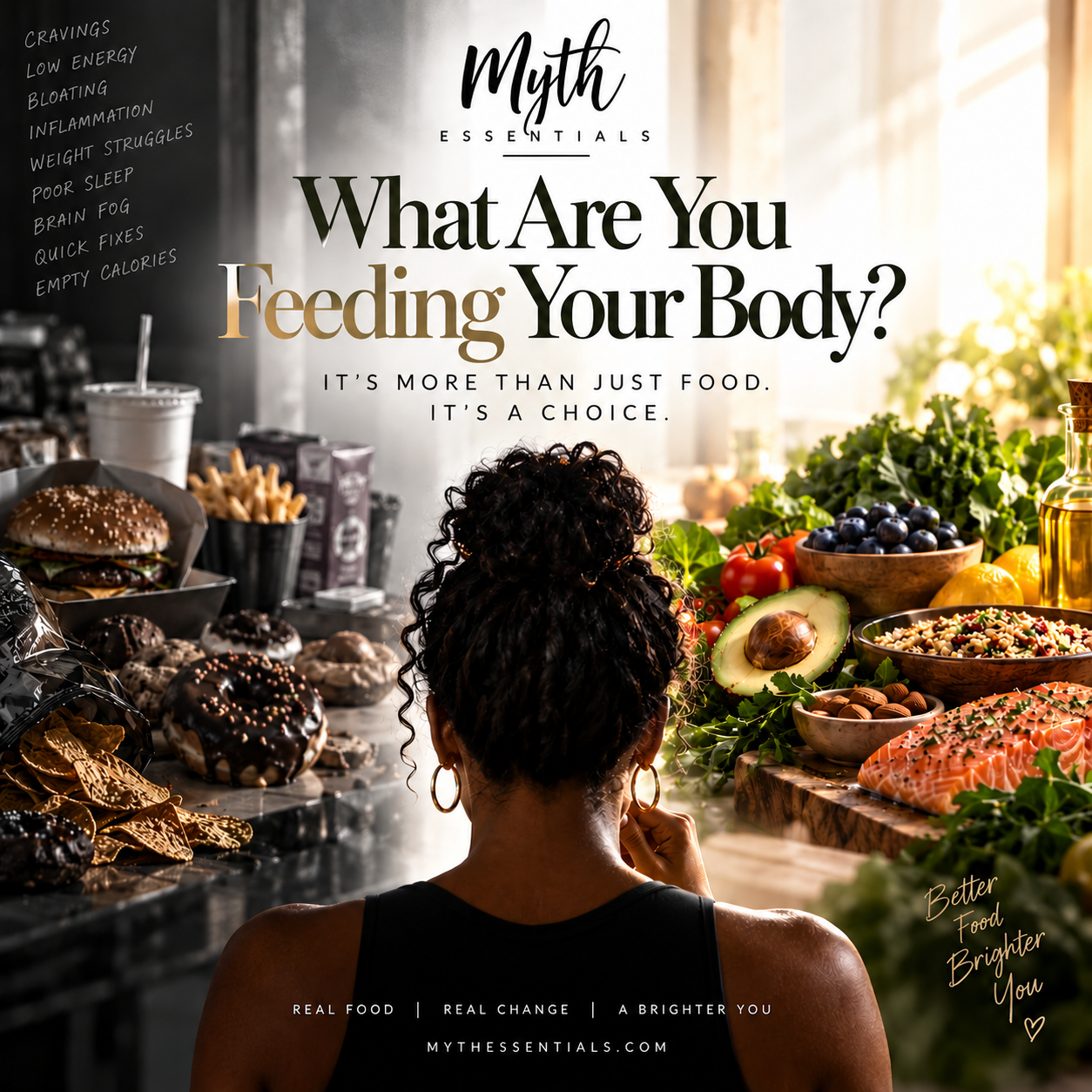
What Are You Feeding Your Body?
Maybe it’s time to think differently about what’s on your plate.
Most of us think about food when we're hungry.
What am I going to eat?
What sounds good?
What's quick?
What can I grab on the way home?
But how often do we stop and ask a different question:
What am I actually feeding my body?
Food does more than satisfy hunger. It provides the protein, carbohydrates, fats, vitamins, minerals, fiber, and other compounds our bodies need to function. What we consistently eat can influence our energy, digestion, heart health, blood sugar, and overall well-being.
That doesn't mean every meal has to be perfect. It means becoming more intentional.
We Feed Our Cravings—But Are We Feeding Our Bodies?
There's a difference between eating until you're full and giving your body what it needs.
You can eat plenty of food and still have a diet that lacks variety, fiber, or important nutrients.
Sometimes our choices are driven by convenience. Sometimes it's stress. Sometimes it's simply habit.
And sometimes, we don't know any different.
Many of us learned how to eat, but we were never really taught how to nourish our bodies.
That's where the conversation needs to change.
What If We Stopped Starting With “What Can't I Eat?”
When people decide they want to eat healthier, one of the first things they often think about is everything they have to give up.
No sugar.
No carbs.
No bread.
No dessert.
No eating out.
Before long, healthier eating starts sounding like punishment.
But what if we asked:
What does my body need MORE of?
Maybe it's more vegetables.
More fruit.
More fiber.
More quality protein.
More healthy fats.
More water.
More foods prepared at home.
Suddenly, the focus shifts from restriction to nourishment.
Your Grocery Cart Is Full of Decisions
Think about your last trip to the grocery store.
What did you put in your cart?
Not from the perspective of good food versus bad food, but from the perspective of purpose.
Do you have foods that provide fiber?
Foods containing healthy fats?
Different-colored fruits and vegetables?
Protein sources?
Whole or minimally processed foods that can become actual meals?
The goal isn't to create the world's healthiest grocery cart.
It's to become aware of what you're choosing.
Because small decisions repeated over time become habits.
Start With One Plate
You don't have to clean out your entire kitchen tonight.
You don't have to follow the latest diet.
And you certainly don't have to become perfect.
Start with your next plate.
Look at it and ask:
Where are the plants?
Where is my protein?
Where is my fiber?
Am I eating because I'm hungry—or because I'm stressed, bored, tired, or simply used to eating this way?
And here's one of my favorite questions:
What could I ADD to this meal that would nourish my body?
That's a very different approach to wellness.
Instead of immediately removing the foods you enjoy, begin discovering foods that your body can benefit from.
Food Is Only One Part of Health
Food isn't magic, and it isn't a replacement for appropriate medical care, medication, movement, sleep, stress management, or other factors that influence health.
But food is one of the choices we make every single day.
Breakfast.
Lunch.
Dinner.
Snacks.
Drinks.
Day after day, those choices add up.
And that's why I believe we need to become more curious about what's on our plates.
Not fearful.
Not obsessive.
Curious.
What am I eating?
Why am I eating it?
What nutrients does it provide?
How does it fit into the bigger picture of how I want to care for myself?
So, What Are You Feeding Your Body?
I want to leave you with a challenge.
Don't change anything yet.
For the next few days, simply pay attention.
Notice what's on your plate.
Notice what you're drinking.
Notice when you eat.
Notice why you eat.
And then ask yourself:
“Am I simply feeding my hunger, or am I nourishing my body?”
There are no perfect answers.
We're just starting a conversation.
And over the next several weeks, Myth Essentials is going to explore that conversation a little deeper.
Something new is coming.
11.01.26
Myth Essentials — Eat With Purpose. Live With Intention.
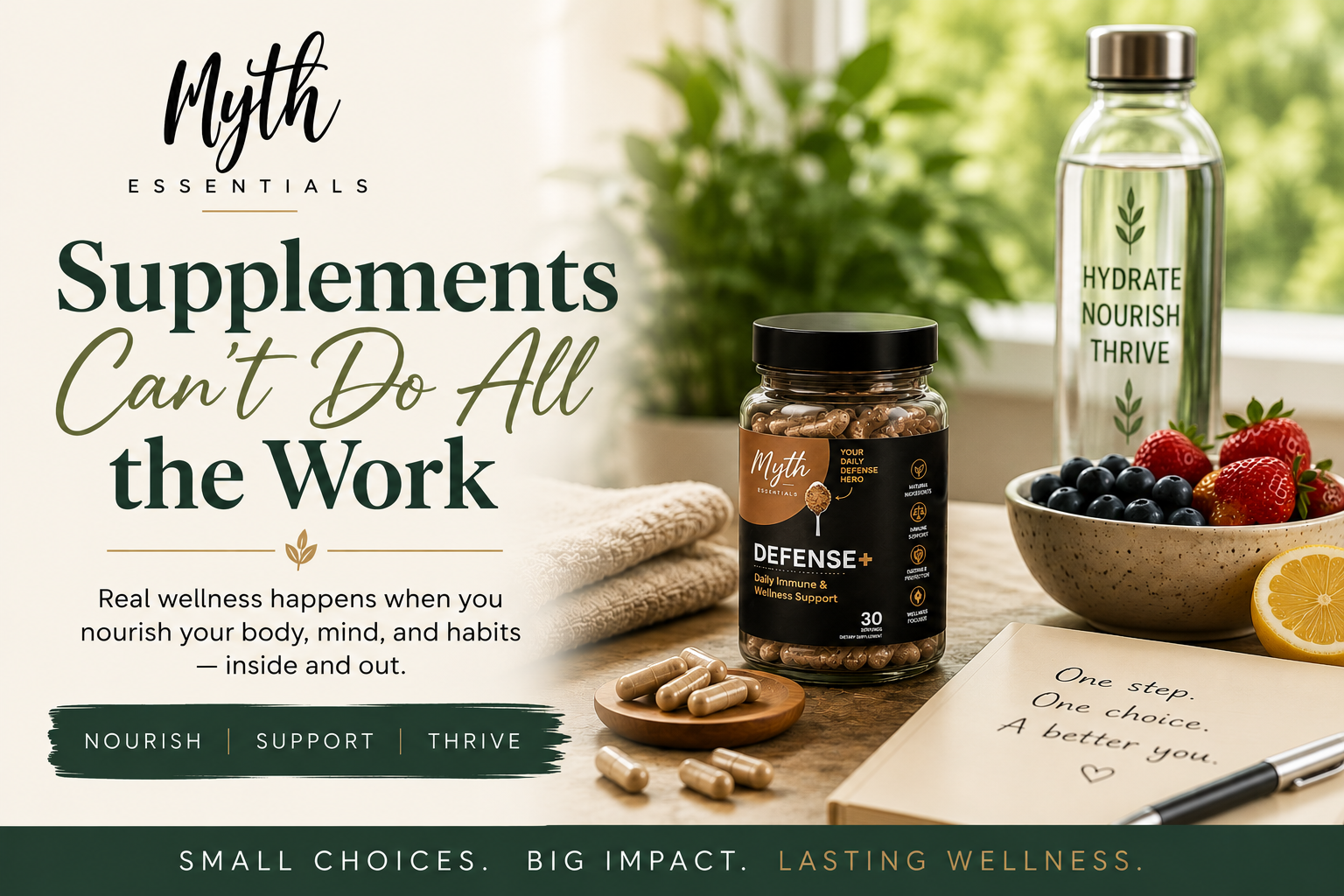
Your Supplements Can’t Do All the Work
You’re taking your supplements. You’re being consistent. You’re waiting to feel a difference.
But have you considered what else your body is dealing with every day?
Supplements can be a valuable part of a wellness routine, but they aren’t meant to do all the work. If we're adding supplements while continuing habits that may be putting additional stress on the body, we may be overlooking an important part of the wellness journey.
Sometimes the answer isn't about adding something else.
Sometimes it's about looking at what we can reduce or change.
Let's use added sugar as an example.
What Is Sugar Actually Doing in Your Body?
Sugar isn't automatically the enemy. Your body uses glucose as an important source of energy.
When you eat carbohydrates, your body breaks many of them down into glucose. That glucose enters your bloodstream and becomes available for your cells to use as fuel.
The concern is excessive added sugar, particularly when sugary foods and drinks become a regular part of the day.
A sweetened coffee in the morning. A soda with lunch. A packaged snack in the afternoon. A sweet sauce at dinner. Dessert later that evening.
Individually, they may not seem like much. But added together, they can become a significant amount of added sugar for your body to process.
And what happens with that sugar doesn't just involve your stomach.
It can affect systems throughout your body.
Let's Look at Your Endocrine System
Your endocrine system is a network of glands and hormones that helps regulate many important functions, including metabolism, blood glucose, appetite, growth, reproduction, stress responses, and energy.
One important part of this system is the pancreas.
After you eat, glucose enters your bloodstream. As your blood glucose rises, your pancreas releases a hormone called insulin.
Think of insulin as a messenger that helps your cells know that glucose is available. It helps move glucose from your bloodstream into your cells, where it can be used for energy or stored for later.
This is a completely normal process.
But regularly consuming large amounts of added sugar and highly refined carbohydrates can contribute to repeated rises in blood glucose and greater demand on the body's glucose-regulation system.
Over time, particularly when combined with factors such as genetics, inactivity, excess body weight, inadequate sleep, and other health factors, the body's cells can become less responsive to insulin.
This is called insulin resistance.
The pancreas may respond by producing more insulin to help keep blood glucose within a healthy range. If the body eventually has difficulty compensating, blood glucose can remain elevated, increasing the risk of prediabetes and type 2 diabetes.
That's a much bigger conversation than simply saying, “Sugar makes you gain weight.”
Your Blood, Nerves and Joints Are Connected Too
Persistently high blood glucose can affect other areas of the body as well.
Over time, high blood sugar can damage nerves and the small blood vessels that nourish them. This is why nerve damage can become a complication of diabetes. Burning, tingling, numbness, or unusual sensations—especially in the hands or feet—should always be discussed with a healthcare professional because nerve symptoms can have many different causes.
Then there are your joints.
Sugar doesn't automatically cause joint pain. However, diets high in added sugars and highly processed foods may contribute to an overall dietary pattern associated with inflammation. Excess calorie intake can also contribute to weight gain, which places additional physical stress on weight-bearing joints such as the knees, hips, ankles, and feet.
This is why looking at the body as a whole is so important.
The endocrine system, blood vessels, nerves, metabolism, muscles, and joints don't operate independently of one another.
Your body is a connected system.
So What About the Supplements?
This is where we sometimes have to change our expectations.
You may be taking a supplement because you want support for your energy, joints, general wellness, or another area of your health.
But a supplement doesn't erase everything else happening in your daily routine.
Think about the word itself:
Supplement.
It means something that supplements or adds to what is already there.
Supplements shouldn't be viewed as substitutes for nutritious food, adequate sleep, hydration, movement, stress management, or appropriate medical care.
Instead of immediately asking:
“What else can I take?”
Try asking:
“What is one thing I can change?”
Start With Sugar—but Start Small
Reducing added sugar doesn't mean waking up tomorrow and throwing everything sweet out of your kitchen.
Trying to change everything at once can make healthier living feel like punishment.
Instead, choose one thing.
If you drink two sodas every day, replace one with water.
If your morning coffee contains several teaspoons of sugar or a heavily sweetened creamer, gradually reduce the amount.
If dessert is an everyday habit, try having it less frequently rather than telling yourself you'll never eat dessert again.
If you regularly buy packaged foods, start checking the “Added Sugars” line on the Nutrition Facts label.
Don't worry about changing the entire grocery cart on your first trip.
Pick one product.
Compare two labels.
Choose the one with less added sugar.
That's a change.
Then keep going.
Give Your Body Time to Adjust
Our taste preferences can adapt.
Something that doesn't seem sweet enough today may taste completely different after you've gradually reduced how much added sugar you're accustomed to consuming.
That's why sustainable wellness doesn't have to happen overnight.
Week one: Change one sugary drink.
Week two: Pay attention to your morning routine.
Week three: Replace one high-sugar snack.
Week four: Start reading labels and identifying where added sugars are showing up unexpectedly.
One change becomes a habit.
Then you build another.
Don't Just Add—Evaluate
Wellness isn't simply about collecting more supplements.
Sometimes we have to stop and evaluate what's already happening in our bodies and our daily routines.
What are you eating?
What are you drinking?
How much are you moving?
Are you sleeping enough?
Are you drinking enough water?
How much added sugar are you consuming without realizing it?
Then ask yourself:
What's one thing I can realistically do differently?
Your answer doesn't have to be dramatic.
It just needs to be something you can consistently do.
Supplements Can Support the Journey—But They Can't Walk It for You
At Myth Essentials, we believe supplements can have a place in an intentional wellness routine.
But we also believe wellness is bigger than what's inside a bottle.
It's about becoming more aware of what you're giving your body every day and making small, sustainable choices that support the way you want to feel.
You don't have to change everything today.
Reduce one thing. Replace one thing. Improve one thing.
Then keep building.
Because wellness isn't just about getting through another day.
It's about learning how to thrive.
Myth Essentials — Who says you cannot feel good again? It is just a myth.
This article is for general educational purposes only and is not intended to diagnose, treat, cure, or prevent any disease. Supplements are not a substitute for medical care or a balanced diet. Persistent pain, numbness, tingling, blood sugar concerns, or other symptoms should be discussed with a qualified healthcare professional.
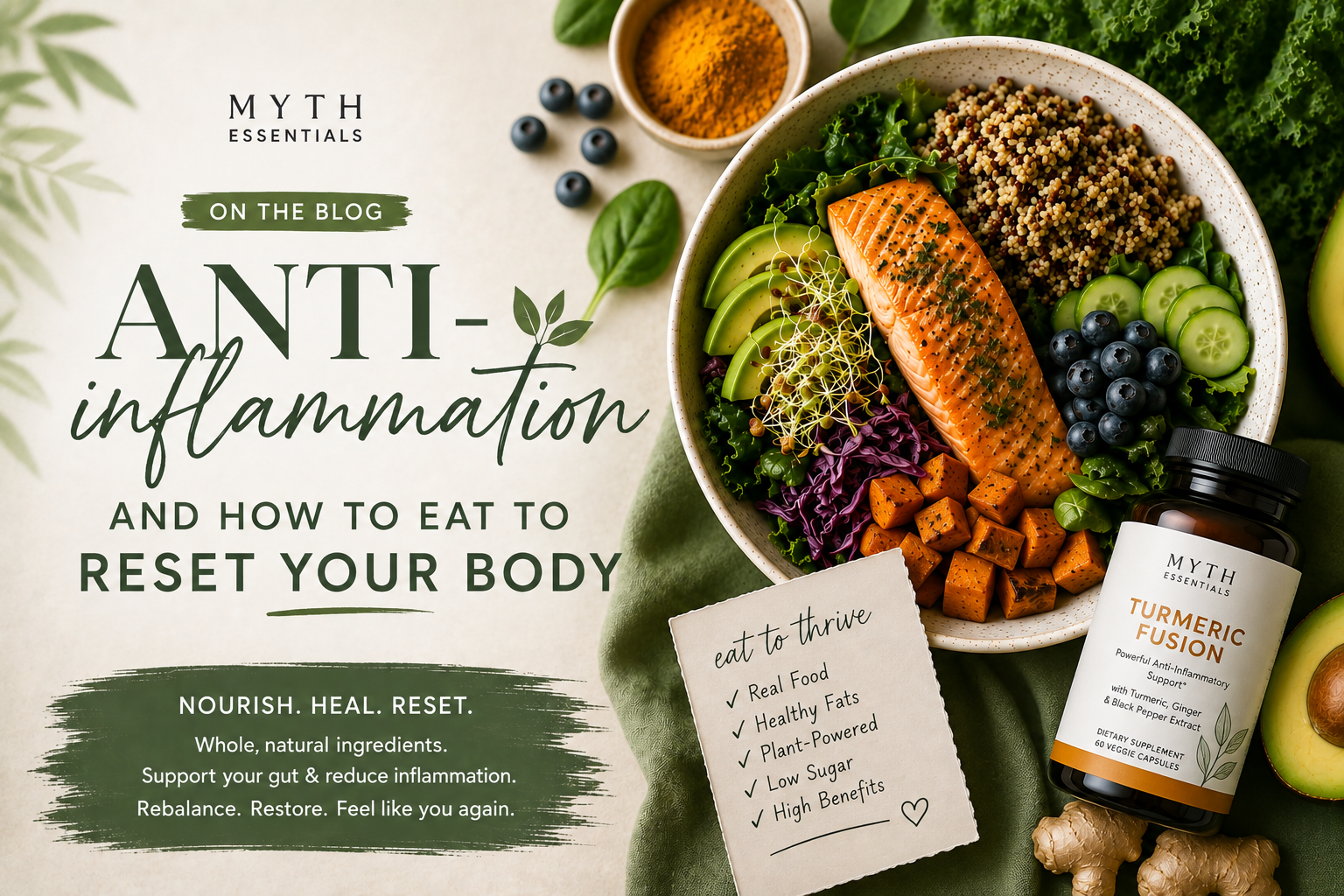
Eat to Reset: Fighting Inflammation Naturally
Discover how simple food choices can help reduce inflammation and support your body's natural healing process. Learn which nutrient-rich ingredients to add to your plate, which foods to limit, and practical ways to reset your body through healthy, anti-inflammatory eating.
What you eat every day can either fuel inflammation or help your body heal from it. While occasional inflammation is a normal part of the body's defense system, chronic inflammation has been linked to fatigue, joint discomfort, digestive issues, brain fog, and many long-term health concerns.
The good news? Your next meal can be the beginning of a reset.
By choosing whole, nutrient-rich foods like colorful vegetables, berries, leafy greens, healthy fats, herbs, and anti-inflammatory spices such as turmeric and ginger, you give your body the nutrients it needs to restore balance from the inside out.
In this article, we'll explore simple ways to reduce inflammation through everyday food choices, highlight ingredients that support your body's natural healing process, and share practical tips for creating meals that leave you feeling energized, refreshed, and thriving.
Because real wellness doesn't come from quick fixes—it begins with what you put on your plate.
Your body was designed to heal, but the foods you eat every day can either support that process or work against it. While inflammation is a natural response to injury or illness, ongoing inflammation may leave you feeling tired, achy, bloated, or simply not at your best.
The good news is that you don't need a complicated diet to begin making positive changes. Small, consistent choices can have a lasting impact.
Fill Your Plate with Foods That Nourish
Focus on eating a variety of whole foods that are naturally rich in vitamins, minerals, fiber, and antioxidants.
Some of the best anti-inflammatory foods include:
Leafy greens like kale and spinach
Blueberries and other colorful berries
Avocados
Sweet potatoes
Nuts and seeds
Olive oil
Ginger and turmeric
Fatty fish such as salmon
Fresh herbs and spices
These foods provide nutrients that help support your body's natural wellness and overall health.
Foods to Limit
Highly processed foods, sugary drinks, excessive refined carbohydrates, and fried foods can contribute to inflammation when eaten regularly. Instead of aiming for perfection, focus on replacing processed foods with whole, nutrient-dense alternatives whenever possible.
Small Changes Make a Big Difference
Healthy living isn't about following the latest trend—it's about building habits you can maintain. Start by adding one extra serving of vegetables each day, drinking more water, cooking at home more often, or choosing healthier snacks. Over time, these simple decisions can help you feel more energized and support your long-term wellness.
Eating well doesn't have to be complicated. Building balanced meals with whole, nutrient-rich ingredients can help you stay energized throughout the day while supporting your body's natural ability to recover and thrive. Here are a few simple ways to get started:
Build Your Plate Around Whole Foods
Start with fresh vegetables, fruits, lean proteins, healthy fats, and high-fiber carbohydrates. The fewer processed ingredients on your plate, the more nutrients your body receives.
Add Color to Every Meal
Aim for a variety of colorful fruits and vegetables. Different colors provide different vitamins, minerals, and antioxidants that work together to support overall wellness.
Include Healthy Fats
Foods like avocados, olive oil, nuts, seeds, and fatty fish provide healthy fats that help keep you satisfied while supporting heart and brain health.
Choose Quality Protein
Protein helps you stay full longer and supports healthy muscles. Great options include fish, beans, lentils, eggs, Greek yogurt, and other minimally processed protein sources.
Don't Forget Fiber
Fiber supports digestive health and helps maintain steady energy throughout the day. Add leafy greens, vegetables, berries, legumes, and gluten-free whole grains to your meals whenever possible.
Flavor Naturally
Instead of relying on excess salt or sugary sauces, season your meals with herbs and spices like turmeric, ginger, garlic, rosemary, basil, oregano, and cinnamon to add both flavor and nutritional benefits.
Stay Hydrated
Sometimes low energy is simply dehydration. Drinking plenty of water throughout the day helps support digestion, circulation, and overall body function.
Plan Ahead
Preparing meals or ingredients in advance makes healthy choices easier during busy days. Wash vegetables, cook grains, or portion healthy snacks so nutritious options are always within reach.
Focus on Progress, Not Perfection
Healthy eating isn't about being perfect—it's about making better choices more often. Every nutritious meal is another step toward feeling stronger, healthier, and more energized.
At Myth Essentials, two of our favorites are:
Turmeric Fusion – Formulated with turmeric and other thoughtfully selected ingredients to support your body's healthy inflammatory response and overall wellness as part of a healthy lifestyle.
GoGo Boost – A daily wellness formula designed to complement a balanced diet by providing nutrients that support overall health, vitality, and an active lifestyle.
While supplements are not a substitute for healthy eating, they can be a valuable addition to a routine built on nutritious foods, regular movement, quality sleep, and proper hydration.
Focus on Progress, Not Perfection
Healthy eating isn't about being perfect—it's about making better choices more often. Every nutritious meal is another step toward feeling stronger, healthier, and more energized.
At Myth Essentials, we believe wellness begins with real ingredients, healthy habits, and consistency. Nourish your body with wholesome foods, support your lifestyle with quality supplements, and take one step every day toward becoming the healthiest version of yourself.
Eat well. Feel better. Thrive naturally.
At Myth Essentials, we believe that wellness begins with consistent daily habits. By choosing real, nourishing ingredients and making small improvements over time, you can create a lifestyle that helps you feel your best—one meal at a time.
Eat well. Feel better. Thrive naturally.
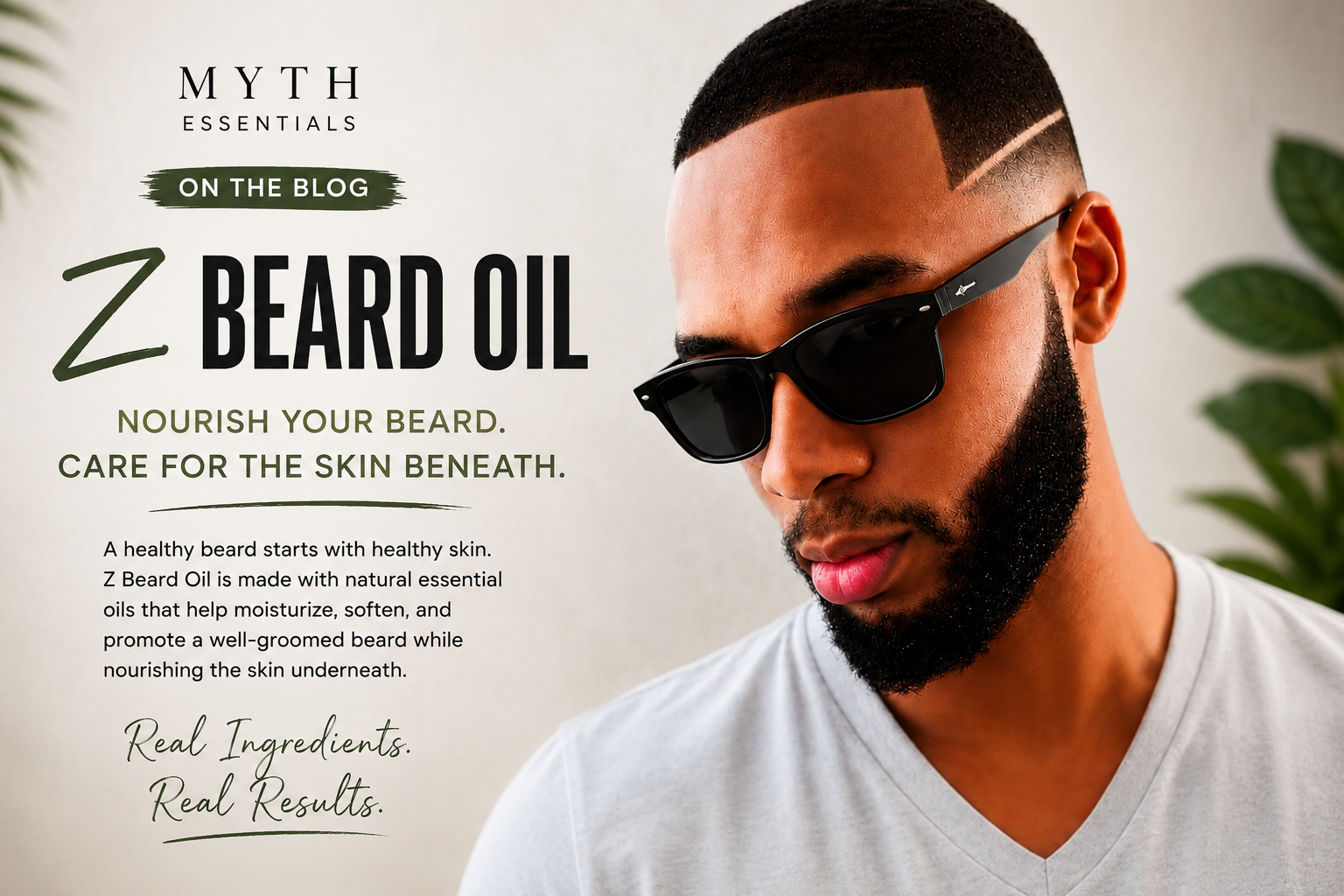
Healthy Beard. Healthy Skin.
Healthy Beard. Healthy Skin.
Discover why healthy beard care starts beneath the surface. In this article, we explore how Z Beard Oil is formulated with natural essential oils and nourishing plant-based ingredients to help soften facial hair, moisturize the skin underneath, reduce dryness and beard itch, and keep your beard looking healthy, conditioned, and well-groomed—naturally.
A healthy beard doesn't happen by chance—it starts with caring for both your facial hair and the skin underneath.
Many men focus on trimming and styling their beard but overlook the foundation that supports healthy growth. Dry skin, beard itch, and flakes can make even the best-looking beard uncomfortable. That's where a quality beard oil can make a difference.
Z Beard Oil by Myth Essentials is made with a carefully selected blend of natural carrier oils and essential oils designed to nourish your beard while moisturizing the skin beneath it. This daily hydration helps soften coarse facial hair, reduce dryness, improve manageability, and promote a healthier-looking beard.
Why Use Beard Oil?
A daily beard oil can help:
Moisturize the skin beneath your beard.
Reduce beard itch and dry, flaky skin.
Soften coarse facial hair.
Improve shine without leaving a greasy feel.
Help tame flyaways for a cleaner, well-groomed appearance.
Why Natural Oils Matter
Natural oils are rich in nutrients that help condition both hair and skin. Instead of simply coating your beard, they help replenish moisture, leaving your beard looking healthier and feeling softer throughout the day.
Whether you're growing a new beard or maintaining a full one, consistency is key. Just a few drops each morning can become part of a simple grooming routine that keeps your beard looking its best.
At Myth Essentials, we believe great grooming begins with quality ingredients. That's why Z Beard Oil is made with natural oils chosen to help you care for your beard and the skin beneath it—because a healthy beard starts at the roots.
Healthy beard. Healthy skin. Naturally.